
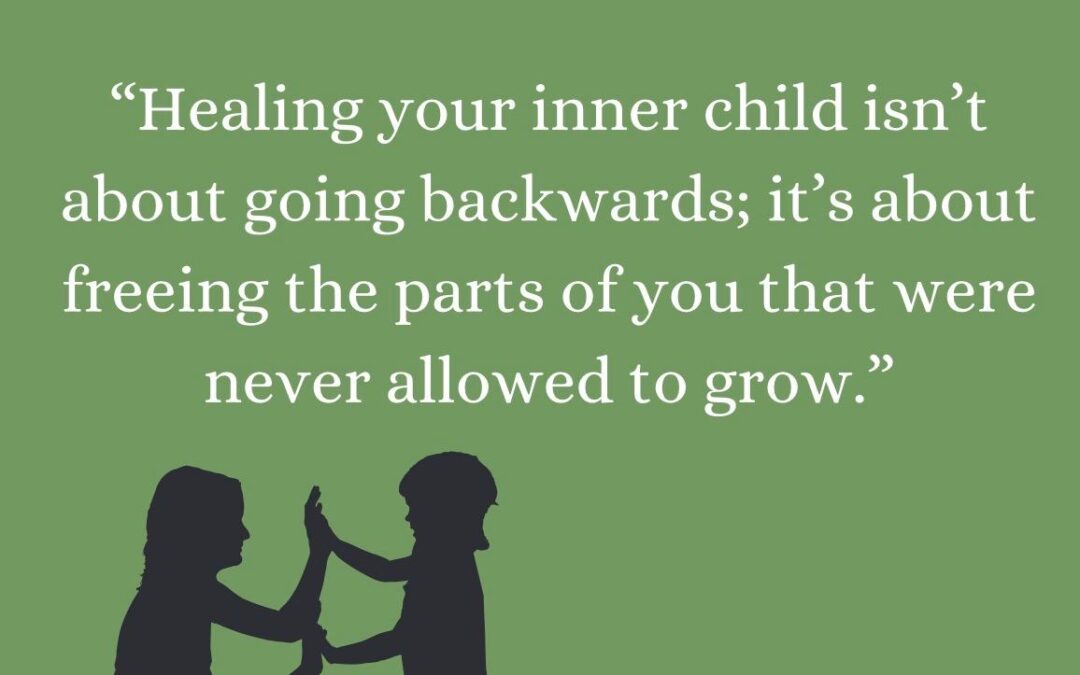
Inner Child Work is a trauma-informed approach for people who grew up with emotional wounds—whether from abuse, neglect, mis-attunement, or simply not having their needs fully understood or met. It weaves together attachment theory, somatic therapies, Jungian concepts, Internal Family Systems, and psychodynamic ideas. These frameworks all share the belief that our past shapes our present, that our bodies and unconscious minds hold deep wisdom, and that healing and reconnection are always possible.
Younger Parts Still Live Within Us
A central idea in Inner Child Work is that we all carry younger parts—different ages, different experiences, different unmet needs. We grow into adult bodies and logical minds, but our younger selves don’t simply disappear. When we’re triggered and confused by the intensity of our reactions, it’s often a younger part stepping forward, asking for attention.
As adults, we often ignore these internal cries. We shut down, minimise, dissociate, or try to “fix” the feeling. These responses are usually old survival strategies from childhood—strategies that protected us then but now keep us stuck.
Simply coming to therapy means you’ve already begun Inner Child Work. Something in you knows that a part of your story needs care, repair, and a new way forward. There isn’t a set protocol; it’s a gradual, ongoing process for most people, and for some it becomes a lifelong practice.
Inner Child Work involves building safe relationships, developing a compassionate inner parent, learning boundaries and healthy entitlement, grieving what you didn’t receive, understanding intergenerational trauma, and making space for joy, creativity, and play in service of your authentic self.
Glimmers and Joy
Part of this work is rediscovering what feels nourishing. Many people who had to grow up too soon, who lived in fear, or who lacked a warm, attuned adult find it difficult to access play, spontaneity, or rest. These qualities can also become muted in cultures that reward overwork, emotional numbness, and hyper-independence. Inner Child Work helps reopen those pathways.
Trauma does not only come from obvious harm. Subtle emotional neglect—mis-attunement, constant criticism, a parent’s stress spilling over, or simply not being understood and seen—can profoundly shape a child’s sense of self. Children need room to explore, experiment, and be themselves within safe boundaries. When that environment isn’t available, it leaves a mark.
How Inner Child Work Helps
Inner Child Work supports you to:
- develop new ways of being with yourself and others
- understand family dynamics, roles, and survival patterns
- build a felt sense of safety in your body and nervous system
- explore your internal parts, even those that conflict
- recognise triggers and reduce emotional overwhelm
- soften shame and the “not good enough” story
- strengthen the bridge between emotional and logical processing
- increase choice, flexibility, and resilience
- cultivate compassion for what you lived through
Who Is It For?
In truth, anyone can benefit. Most people have experienced some form of emotional wounding. For some, the trauma was explicit—physical or sexual abuse. For many others, it was subtle: emotional misunderstanding, conditional approval, or the sense that feelings and needs didn’t matter.
A common phrase I hear is, “My parents gave me everything. I don’t know why I feel this way.” Often physical needs were met, but emotional ones were not. When this happens, children adapt. They people-please, avoid conflict, overachieve, rebel, self-harm, or disappear into work or fantasy. Without modelling of emotional regulation, we tend to repeat the patterns we grew up with.
Even those with a “good enough” childhood still experience wounds—from school, friendships, relationships, or the culture around them. Many of us live in a society that glorifies busyness and leaves very little space for rest, connection, and simply being.
Ways to Begin or Deepen Your Inner Child Work
- Create time for unstructured rest or play: nap, walk, craft, read an old favourite story.
- Check basic needs: water, food, toilet, movement, sleep.
- Listen to music you loved as a child or teen.
- Seek comfort: a soft blanket, warm drink, sunlight, a hug.
- Keep photos of yourself at different ages; write to those younger parts.
- Notice your triggers: what age do you feel, and what do you need?
- Use your non-dominant hand to draw or write; see what younger parts might express.
- Work with a trauma-informed therapist experienced in complex/developmental trauma.
- Remind yourself: your past shaped you, but you can now be the caring, protective adult you always needed.
- Hold the truth that you can love your parents and still be hurt by what they did or couldn’t give. Both can be true.
As we build healthier relationships with ourselves, healthier relationships with others naturally follow.
Further resources/books:
- The Inner Child Workbook
- The Drama of the Gifted Child
- Complex PTSD: From Surviving to Thriving
- The Emotionally Absent Mother
- The Attachment Theory Workbook
- Attachment: 60 Trauma-Informed Assessment and Treatment Interventions Across the Lifespan