Journaling supports the therapy process by enhancing self-reflection and helping clients process thoughts and emotions between sessions. It can reveal patterns, triggers, and recurring behaviors that might not be immediately obvious, while also serving as a healthy outlet for emotional regulation. Writing provides a private, judgment-free space to explore difficult feelings, making it easier to communicate them in therapy. It also strengthens coping strategies, reinforces self-compassion, and helps track progress over time, offering a tangible reminder of personal growth. By integrating journaling into therapy, clients can deepen their healing journey and gain greater insight into their emotions and experiences.
Here are some prompts to guide your journalling:
Reflecting on Sessions
- What stood out to me the most in my last therapy session?
- What emotions came up during therapy, and how did I handle them?
- Was there anything I avoided talking about? Why?
- What is one key insight I gained from my therapist today?
- How has my perspective on my struggles changed since starting therapy?
Exploring Feelings & Patterns
- What emotions have been the hardest for me to process lately?
- What situations tend to trigger strong emotional reactions in me?
- What are some recurring thoughts or patterns I’ve noticed in myself?
- How do I usually cope with difficult emotions? Are those coping mechanisms serving me well?
- When was the last time I felt truly at peace? What contributed to that feeling?
Inner Work & Growth
- What self-limiting beliefs am I working on shifting?
- What would I say to my younger self who was struggling with this same issue?
- What does healing look like for me right now?
- What would self-compassion sound like in this moment?
- What small step can I take toward my healing this week?
Therapy Challenges & Resistance
- Is there anything about therapy that feels difficult or uncomfortable right now?
- What fears do I have about healing or change?
- Are there any topics I feel hesitant to bring up with my therapist? Why?
- How do I typically respond when I feel challenged or pushed outside my comfort zone?
- What would it feel like to fully trust the therapeutic process?
Looking Forward
- What do I hope to gain from therapy in the next few months?
- What does “progress” mean to me in my healing journey?
- How can I integrate what I’m learning in therapy into my daily life?
- What strengths am I discovering about myself through therapy?
- If I could send a message to my future self about this journey, what would I say?
Understanding Your Childhood Experiences
- What are some of my earliest memories, and how do they make me feel?
- How did I feel as a child in my home environment?
- What messages did I receive about love, safety, and belonging growing up?
- What were my coping mechanisms as a child? Do I still use them today?
- If I could sit with my younger self right now, what would I say to them?
Processing Painful Memories
- What is one childhood memory that still affects me today?
- How did I learn to protect myself emotionally as a child?
- Are there any parts of my story that I find difficult to accept?
- What emotions come up when I think about my past, and where do I feel them in my body?
- What do I wish the adults in my life had done differently?
Recognizing Patterns & Impact
- How has my childhood trauma shaped the way I see myself?
- What beliefs about myself did I develop as a result of my experiences?
- How do my childhood wounds show up in my relationships today?
- In what ways do I still carry the burdens of my past?
- What triggers remind me of my childhood pain, and how do I usually react?
Reparenting & Self-Compassion
- What did I need as a child that I can give to myself now?
- How can I show love and care to my inner child today?
- If I imagine my inner child sitting with me, what do they need to hear?
- What self-soothing techniques feel nurturing and safe for me?
- How can I remind myself that I am safe in the present moment?
Healing & Moving Forward
- What does healing from childhood trauma mean to me?
- What are some healthy ways I can release anger, sadness, or grief?
- What does my body need from me as I process these emotions?
- How can I begin to rewrite my story in a way that empowers me?
- What strengths have I developed because of what I’ve been through?
Healing Shame
Shame is a deep, painful feeling of inadequacy or unworthiness, often stemming from a belief that one is fundamentally flawed or unacceptable. It is felt internally.
- What is your first memeory of shame?
- What other memories do you have of shame?
- How did shame become part of your inner dialogue?
- When you feel shame, what do you do? Hide, eat, get angry, blame someone else?
- Are you arounf people who shame you?
- What boundaries do you have with those people?
This is deep work, and it’s okay to take it slow. Do any of these prompts stand out to you?
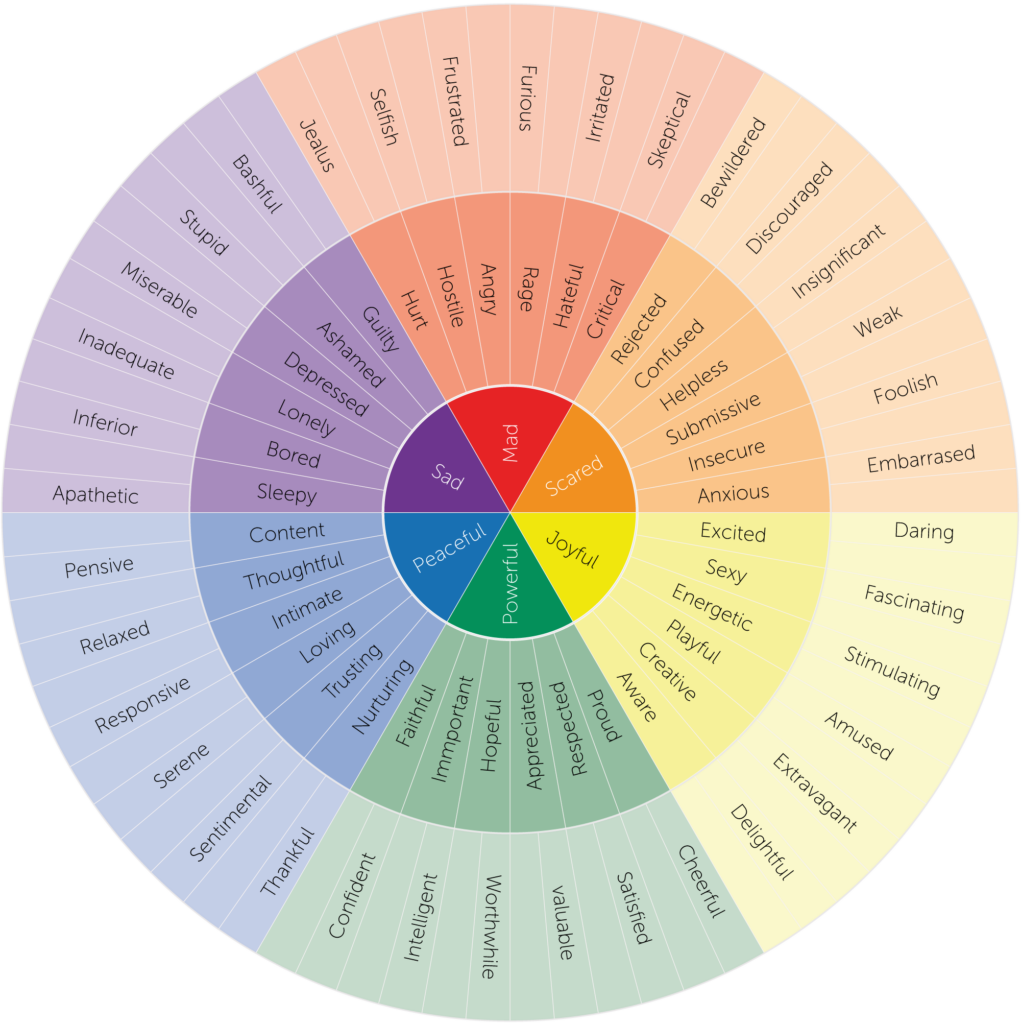
You might find it helpful to use the feelings wheel below to connect with your emotions.